For a moment, I honestly thought he was joking.
He wasn’t.
“I know how this sounds,” he said quietly. “But I don’t want to die knowing I was completely alone.”
My heart began pounding.
“Carl, we’ve only known each other for a few months.”
“I know,” he replied. “But I knew what kind of person you were almost immediately. You listen. You show up. You don’t treat people differently because they’re sick.”
He paused.
“Please. It would mean everything to me.”
It wasn’t a proposal filled with flowers, music or promises about decades together.
It was something much more fragile.
A dying man asking for one final moment of companionship.
After thinking about it, I said yes.
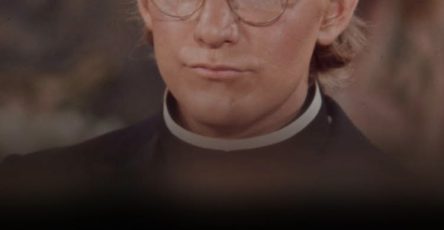
The following day, a priest came to Carl’s house.
There were no guests.
No decorations.
No elaborate ceremony.
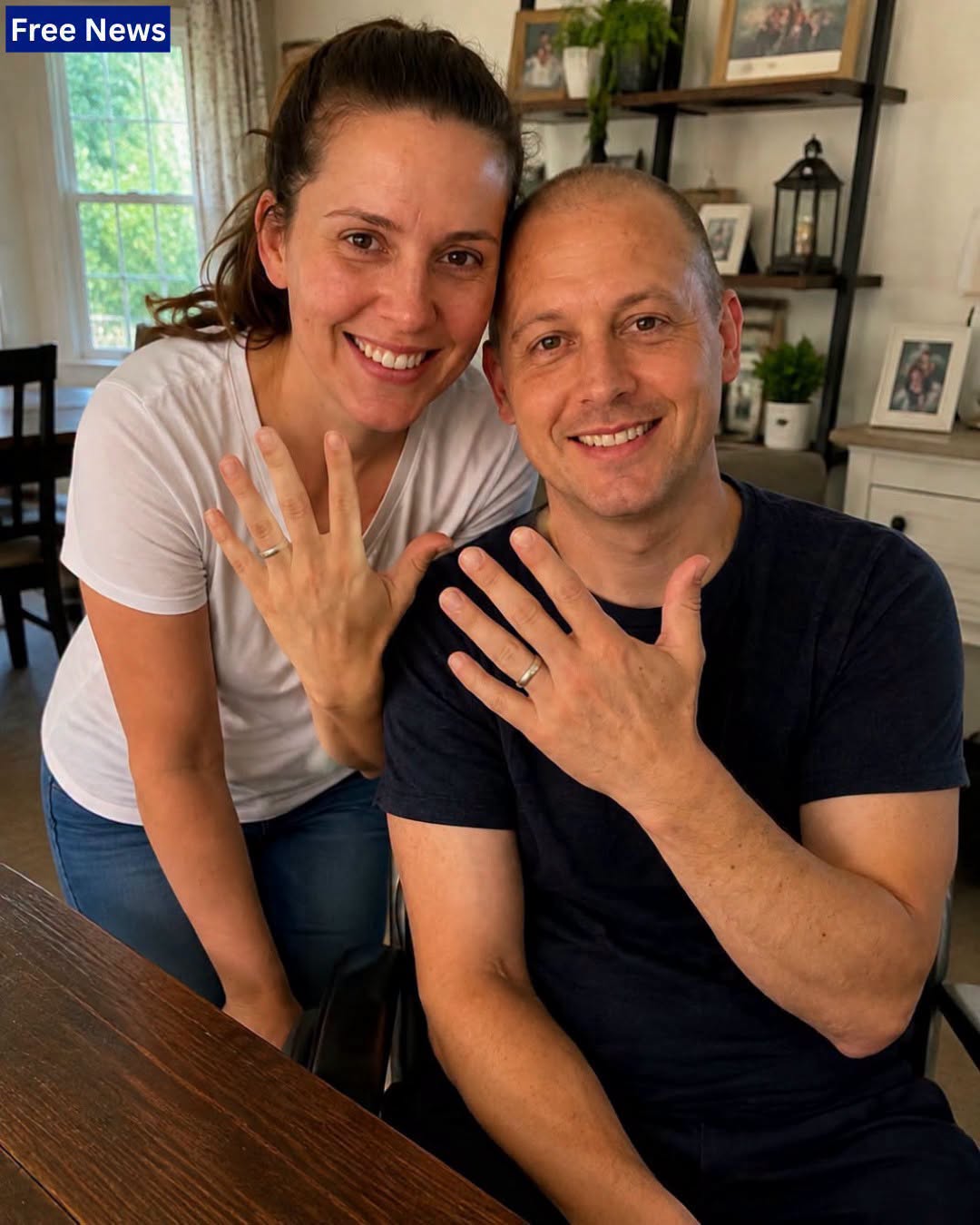
Just the two of us standing in his living room while a priest quietly married us.
Carl looked happier than I had seen him in months.
He kept looking at the ring on my finger as though he couldn’t quite believe what had happened.
Ten days later, he was gone.
I was devastated.
I knew Carl was dying when we married, but knowing something intellectually doesn’t make losing someone easier.
I mourned him as a friend.
And as my husband.
After the funeral, I returned home exhausted.
I expected the house to be quiet.
Instead, there was a knock at my door.
When I opened it, a man stood outside carrying a sealed envelope and a worn leather journal.
He introduced himself as Mr. Baron, Carl’s attorney.
“I need to speak with you about Carl,” he said.
I invited him inside.
He sat across from me and carefully placed the envelope on the table.
“Carl made me promise I wouldn’t tell you anything until after his funeral.”
I stared at him.
“Why?”
“Because he wanted you to remember him for who he was,” Mr. Baron said, “not for what he had been keeping from you.”
My hands began to shake.
Then he said something I will never forget.
“Carl wanted you to know the truth about your past together.”
I looked down at the envelope.
My name was written across the front in Carl’s handwriting.
I opened it.
The first sentence stopped me cold.
“My dear, our meeting was not a coincidence.”
I kept reading.
“I’ve known you your whole life, and I have been quietly watching over you.”
My knees suddenly gave way.
I sat down on the floor.
For the first time, I understood that the man I thought I had met only months earlier had known something about me that I didn’t know about him.
Something connected us.
Something that stretched back decades.
Inside the letter, Carl explained that our lives had crossed when we were children.
Before a devastating family tragedy eventually placed me in foster care, I had lived near Silver Oak Street.
And there had been a quiet boy nearby named Carl.
At first, the memories came back only in fragments.
A boy who rarely spoke when he became overwhelmed.
A grandfather who repaired bicycles.
An old workshop.
A young Carl who seemed uncomfortable around crowds but could spend hours working with his hands.
Then I remembered something else.
One afternoon, I had found him sitting alone after what appeared to have been a difficult moment.
I didn’t know what to say.
So I told him a ridiculous story about a stray kitten.
He eventually smiled.
I never thought about that afternoon again.
Carl never forgot it.
According to his letter, that tiny act of kindness had stayed with him for decades.
After my family tragedy, I disappeared from his life.
He didn’t know where I had gone.
But he never stopped wondering.
He kept journals about the people he had met and the moments that had shaped him.
In those journals, Mr. Baron said, Carl repeatedly wrote about me.
He hoped I was safe.
He hoped I had found happiness.
And eventually, after years had passed, he began quietly looking for me.
When he finally found me again, he didn’t tell me who he was.
He simply watched.
He wanted to know whether the woman standing in front of him was still the same person who had once sat beside a frightened boy and told him a silly story about a kitten.
That revelation changed everything.
I had believed Carl asked me to marry him because he was dying and didn’t want to be alone.
That was part of it.
But it wasn’t the whole story.
He had wanted to know whether the kindness he remembered from childhood still existed in me.
And when I said yes, he knew the answer.
Mr. Baron also explained that Carl had spent years preparing his affairs.
His estate documents were organized.
His investment records were carefully maintained.
His insurance arrangements were in order.
He had even prepared plans intended to make sure I would not be left financially vulnerable after his death.
But there was no secret fortune waiting for me.
No hidden mansion.
No elaborate inheritance scheme.
The most valuable thing Carl had left behind wasn’t money.
It was the story.
The story of a small kindness that had followed him for most of his life.
A few weeks later, I returned to Silver Oak Street.
I wanted to see the place where our lives had first crossed.
Almost everything had changed.
The old houses were gone.
The workshop had disappeared.
The bicycle shop was no longer there.
But one thing remained.
A large maple tree.
I stood beneath it holding Carl’s favorite novel.
Inside the book was a fragile red leaf.
Carl had once told me that when we were children, I had left the leaf inside his book as a joke.
I had completely forgotten.
He hadn’t.