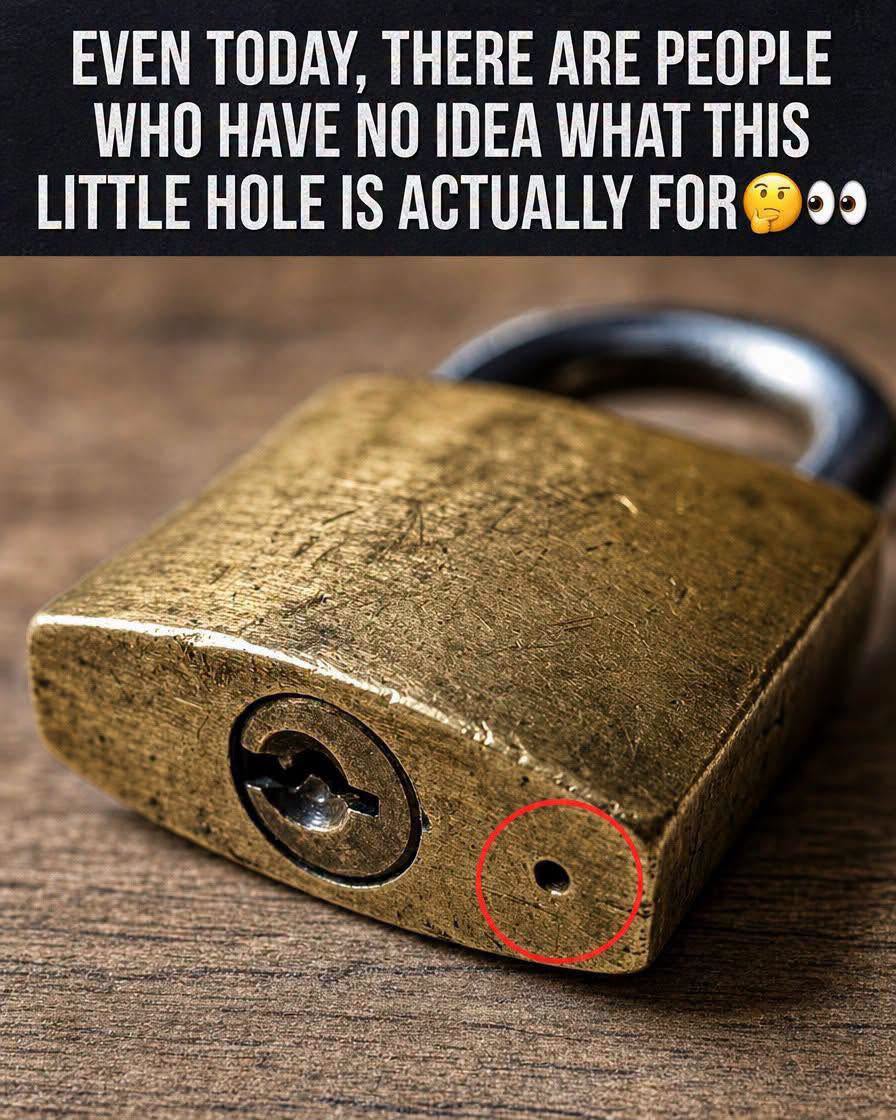
Have you ever noticed the tiny holes at the bottom of a padlock? Although they may appear to be insignificant manufacturing details, these small openings often serve important purposes that help keep locks functioning properly, particularly when exposed to outdoor conditions.
One of their primary functions is drainage. Padlocks used on garden gates, sheds, fences, and storage units frequently encounter rain, humidity, and changing temperatures. Moisture can gradually enter the lock’s housing and accumulate around its internal components.
When water becomes trapped inside a padlock, it can contribute to rust and corrosion. Over time, these problems may make the key difficult to turn, interfere with moving parts, or eventually prevent the lock from opening properly.